

BeeStep
For Chefs & Healthcare Professionals
- Ultra Comfort
- Slip Resistant
- Lightweight
- Long Shift Support
Beestep
·
Beestyle
·
Beestrong
Premium footwear engineered for professionals who spend every day on their feet.
Designed for Comfort. Built for Performance.

Our Collection
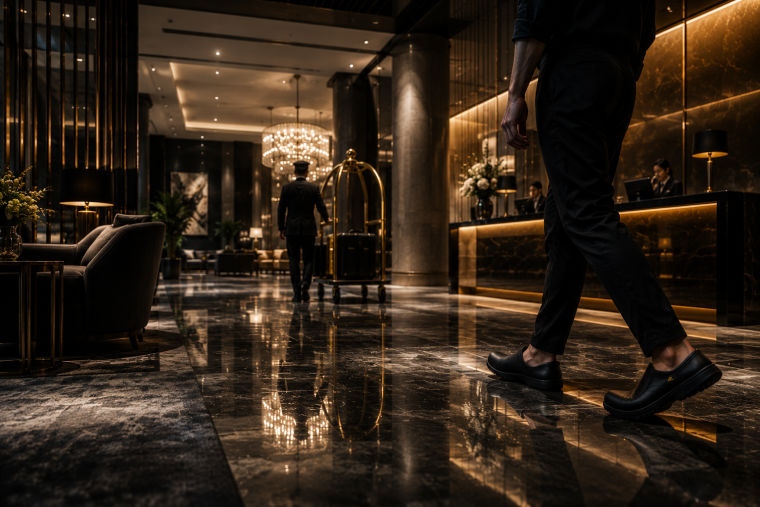
Elegant enough for front-of-house.
Comfortable enough for 12-hour shifts.
Perfect for:
Engineered protection for demanding workplaces.
Why BeeStep?
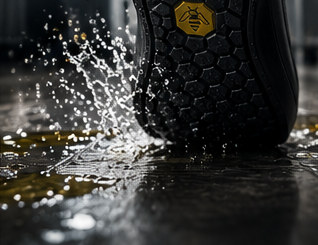

Wet tile, kitchen grease, a freshly mopped corridor — the outsole is built to keep its grip exactly where ordinary footwear gives up.
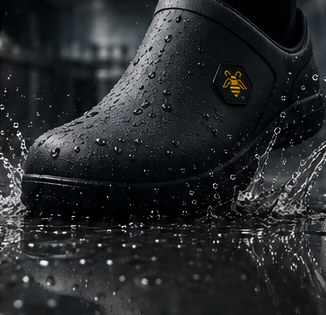

Spills, splashes and wash-downs stay on the outside, so one unlucky moment doesn't decide how the rest of the shift feels.
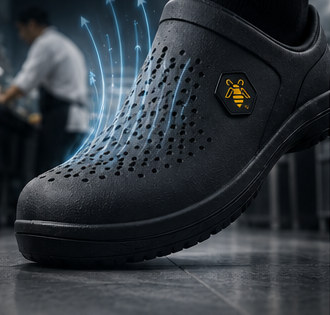

Airflow designed into the upper keeps feet cooler and drier through the hours that never seem to end.
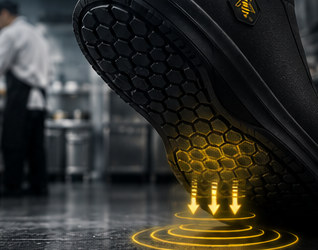

Hard floors send every step straight back up at you. The midsole is there to take that impact so your joints don't have to.
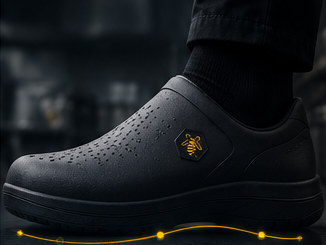

Support shaped around how a foot actually moves — arch, heel and stride working with you rather than against you.
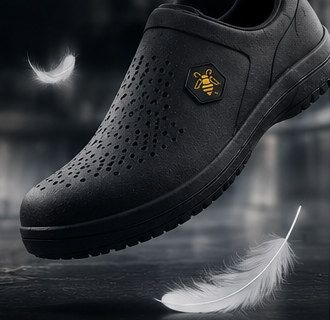

A few grams saved on every step add up across thousands of them, so your legs still have something left at the end.
Industries We Serve
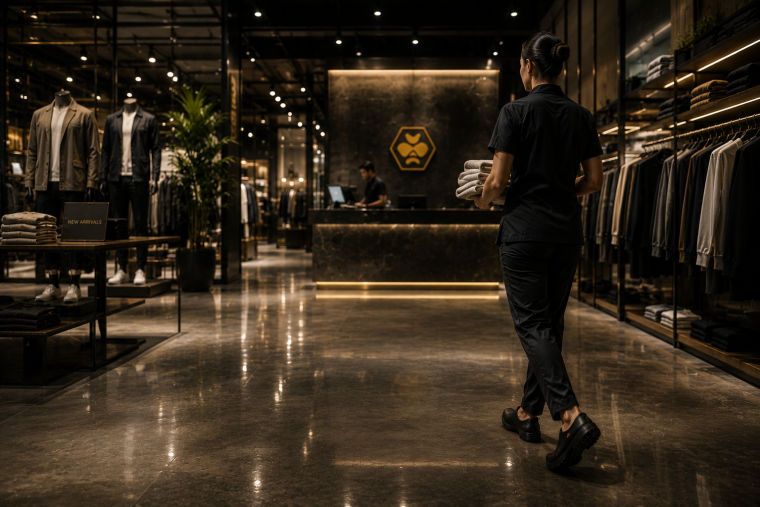
Elegant enough for the lobby, tough enough for a 12-hour shift.
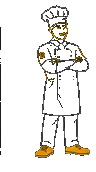
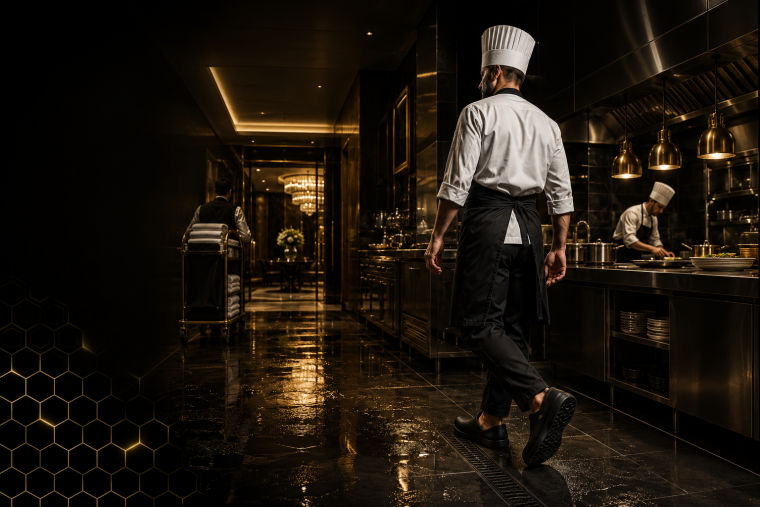
Built for chefs and servers who never stop moving.
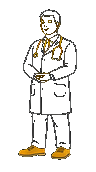
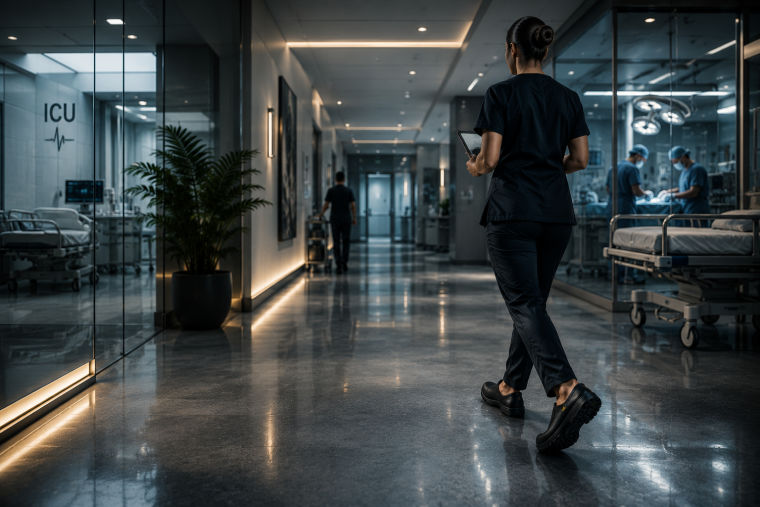
Certified comfort for long clinical shifts.
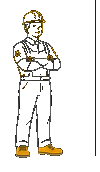
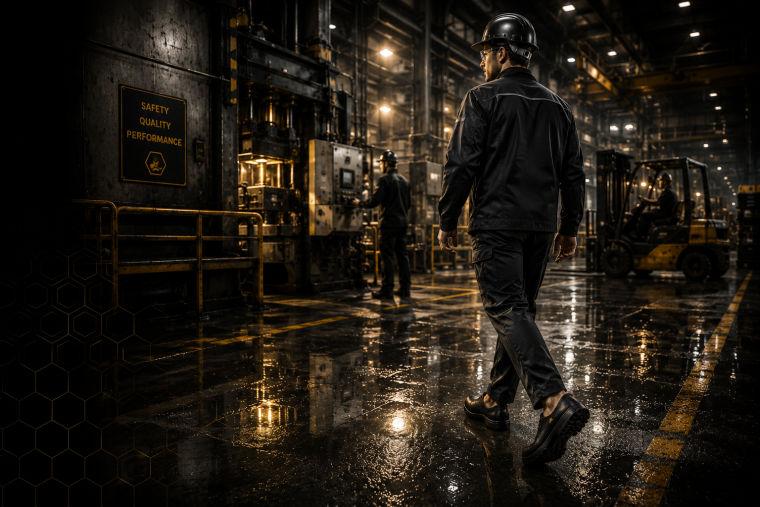
Engineered protection for demanding factory floors.
All-day support for professionals on their feet.
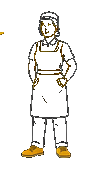
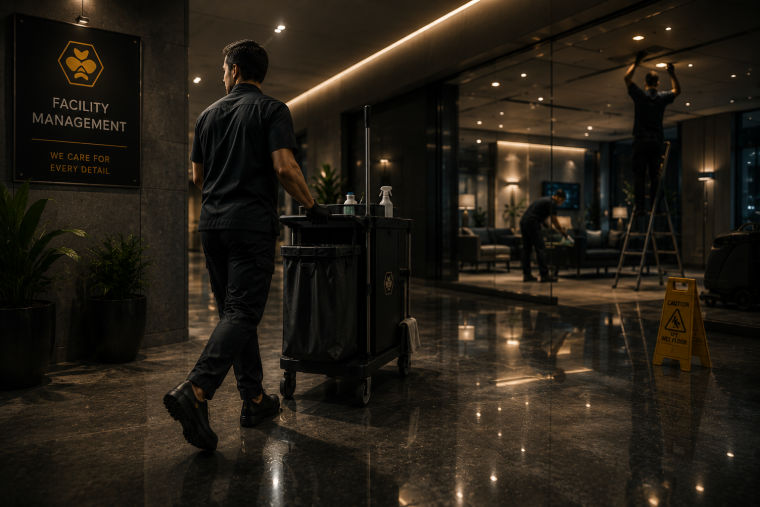
Reliable grip for round-the-clock cleaning teams.
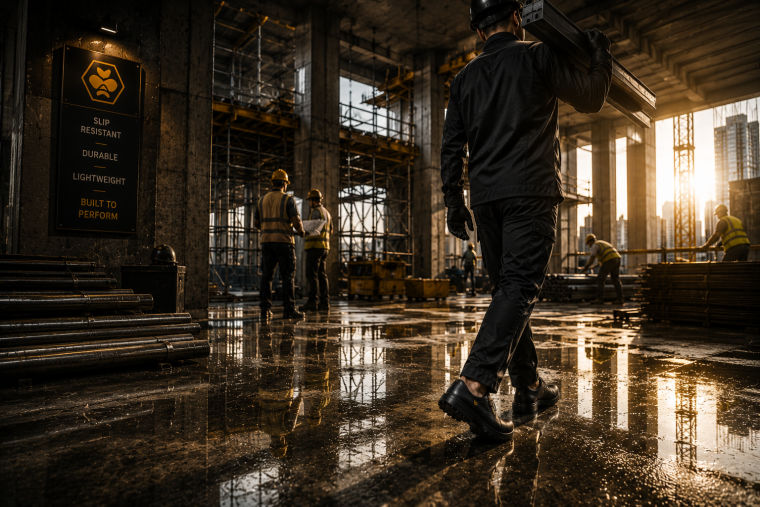
Rugged durability built for the toughest sites.
Dependable comfort across every gate and shift.
Our Promise
Every BeeStep product combines modern design with professional performance to support people who spend their lives standing, walking and serving others.

New Arrivals
Chef & Medical

Service & Hospitality

Safety & Industry

All Professionals

Customer Testimonial
 ★★★★★
★★★★★“Finally, a work shoe that feels like a sneaker.”
Restaurant Manager
 ★★★★★
★★★★★“Our chefs wear them every day.”
Executive Chef
 ★★★★★
★★★★★“Comfort through an entire 12-hour shift.”
Hospital Supervisor
From the Blog
Slips, trips and falls on the same level are the single most common cause of reported workplace injury in Great Britain — 30% of all non-fatal cases. A properly designed outsole is the one safeguard that travels with the worker into every room.
On a kitchen line, a hospital ward, or a factory floor, the ground rarely stays dry for long. Spilled oil, mopped tile, condensation — the surfaces professionals cross every day aren't engineered for them.
This is not a marginal risk. In Great Britain, slips, trips and falls on the same level account for 30% of all non-fatal workplace injuries reported by employers — the single most common cause, ahead of both lifting injuries and being struck by a moving object.
What makes that figure striking is how ordinary the circumstances usually are. These are rarely dramatic accidents involving heights or machinery; they are people walking across a floor they have crossed a thousand times before.
A generic sneaker or fashion shoe is built for dry pavement — not a commercial kitchen's grease film or a hospital corridor's fresh wax. That's the gap slip-resistant outsoles are built to close. The right rubber compound stays flexible instead of hardening and losing grip; the right tread pattern channels liquid away from contact points instead of trapping it underfoot.
Footwear alone will never eliminate the hazard — spill procedures, matting and signage all matter. But it is the one control that travels with the worker into every room, on every shift.
For anyone whose shift happens standing on someone else's floor, that's not a detail — it's the foundation everything else is built on.
Source: Health and Safety Executive (HSE), Non-fatal injuries at work in Great Britain, 2024/25.
AB'de her beş çalışandan yaklaşık biri gününün çoğunu ayakta geçiriyor. Ergonomik destek, hiç oturamayan profesyoneller için bir lüks değildir — on iki saatlik vardiyanın onları bitirmesini engelleyen şeydir.
Nobody clocks out after twelve hours and feels the same as they did at the start. But how much of that exhaustion actually needs to happen is a fair question — and the answer usually starts at the floor.
Standing work is not a niche condition. Around one in five workers in the European Union spends most of the working day on their feet, and between a third and a half of all workers stand for at least four hours a day.
Every hour spent standing sends small, repeated stress through the same joints: ankles, knees, lower back. Without proper support, that stress compounds instead of dissipating. By hour eight, it's not just your feet that are tired — it's your focus and your patience.
Ergonomic support isn't about cushioning alone. It's about how weight moves through the foot with each step, how much the arch is asked to do on its own, and whether the shoe is working with your body over hours rather than minutes.
It is also why a shoe that feels fine in a five-minute fitting can feel like a different object at hour nine. Comfort that only exists at the beginning of a shift isn't really comfort — it's a first impression.
For people who rarely get to sit down, that difference isn't cosmetic — it's the difference between finishing a shift and surviving one.
Source: European Agency for Safety and Health at Work (EU-OSHA), OSHwiki — Musculoskeletal disorders and prolonged static standing; Eurostat, 2019.
Standing more than four hours a day is associated with roughly double the rate of lower-back complaints. Shock-absorbing construction takes on that impact instead of your joints — shift after shift, year after year.
Concrete, tile, industrial flooring — none of it gives. Every one of the thousands of steps taken in a shift lands on a surface that returns the full force straight back up through the body.
Over a single day, that impact is barely noticeable. Over years it becomes measurable: research summarised by EU-OSHA associates standing more than four hours a day with roughly double the rate of lower-back complaints and around 70% more lower-limb complaints, compared with people who stand for less than fifteen minutes.
It adds up in ankles, knees and lower backs that carry more wear than the job should require — one of the most overlooked costs of standing work, precisely because it happens quietly, one step at a time.
Shock-absorbing midsoles exist to interrupt that cycle. Instead of the joint taking the hit, the material does — compressing on impact and returning energy on the next step.
None of this replaces breaks, anti-fatigue matting or sensible shift planning. Footwear is one layer of protection among several — but it is the layer that goes everywhere the worker goes.
It's not a feature you notice on day one. It's the one you're grateful for after year five.
Source: European Agency for Safety and Health at Work (EU-OSHA), OSHwiki — Musculoskeletal disorders and prolonged static standing.


